

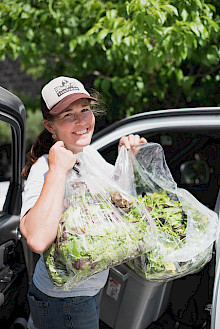
Perry Acworth
Course: Soil to Seed to Snack! Explorations in Urban Food Systems
We are excited to work with a group of students with interdisciplinary interests who are beginning their journey through UW.
Work directly with UW Faculty, begin building connections to the UW Campus and get personalized admissions, academic, and career advising! Watch our introductory video to learn more.
Seminars run from August 25, 2026 through September 17, 2026. Students are expected to be on campus from 9:30 to 12:30pm Tuesday, Wednesday, and Thursday.
As a Seattle College student, you are eligible to receive $1,000 stipend to help offset the potential costs of attending the course (parking, transportation, etc).
If you have any questions, please feel free to contact us at path2uw@uw.edu and a member of our team will follow up with you!
Ready to enroll? 2026 Introduction Seminar enrollment is now open! Priority deadline is Tuesday, May 26th. Visit our seminar enrollment page
We hear a lot about sustainability - clean energy, green buildings, low-carbon materials - but what does it actually mean to engineer a more sustainable world? In this course, we explore how the modern built environment is made, what it costs in terms of energy and carbon footprint, and how engineers across disciplines are rethinking materials and systems to reduce environmental impact.
We will first examine the materials that shape everyday life, from concrete and steel to polymers and composites, and uncover the hidden resource and energy flows behind them. Students will investigate how design choices influence carbon footprints, learn how engineers evaluate material sustainability, and explore emerging strategies for creating lighter, stronger, and more circular technologies. By the end of the course, students will understand how today’s engineered world is built and how tomorrow’s could be cleaner and more sustainable.
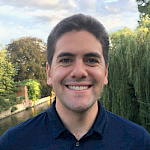
UW Assistant Professor of Mechanical Engineering
I love working with transfer students because they consistently bring drive, focus, and valuable life experience to the classroom. Supporting their transition to UW aligns with my commitment to making engineering more accessible.
Students will get hands-on demonstrations like testing low-carbon cements and recycling polymers, visits to labs like the UW Molecular Analysis Facility to see how materials are characterized, and conversations with UW researchers working on sustainable and bio-based materials.
The course consists of short lectures with interactive discussions, hands-on demonstrations, and case studies that reveal how design choices influence environmental impact. Students will read research articles on sustainable technologies and develop a team proposal that addresses a real engineering sustainability challenge. By the end of the course, students will understand the materials that make up the built world, the energy and carbon costs behind them, and discover new ways to develop more sustainable material choices.
This course is an introduction to the social issues highlighted through a study of mycology. It takes a political ecology approach to learning about fungi and their fruiting bodies, mushrooms. We’ll journey through the political, social, historical, and geographical issues that surround mushrooms and learn what these issues can reveal about the world around us. We’ll focus less on the “what” and more on the “why” of mycology. Students will learn about scientific data collection, participate in an established community science project, visit the UW Herbarium, and explore the many offerings of the University of Washington through an interdisciplinary approach.
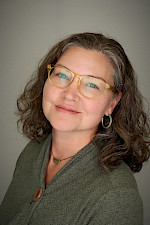
UW Assistant Teaching Professor, Integrated Social Sciences
As an Integrated Social Science Program core faculty member, I work every day with transfer students in my teaching. I have found transfer students to the UW are excited to embark on this new learning journey and I’m privileged to be a part of that journey. I see my role in the process is to create interesting, challenging, and relevant materials that foster students’ excitement and encourage them to become critical thinkers about the world around them.
Students will get to go on a behind-the-scenes tour of the mycology collection overseen by the Burke Museum. This course takes an interactive and hands-on approach to learning that connects with many different fields, so is a great fit for students who prefer a less traditional in-classroom learning setting.
Through this course, students will learn to understand and analyze the interdisciplinary nature of mushrooms in social science research; participate in public scholarship; articulate your ideas and feelings about complex environmental issues, both in writing and in conversation; critically analyze environmental social issues and responses to these issues in light of their social, political, economic and ecological ramifications; and explain basic ethical challenges, questions and concerns related to the natural world. We will use a variety of evidence-based pedagogical methods to engage with topics related to mycology, sociology, and the environment. Students are encouraged to center themselves in the learning process to create informed and compelling questions to guide our conversations and activities in the classroom. We will also use these questions to guide our written work, site visits, and participation in public scholarship.
Topics we will explore in the course include:
The question of 'what to eat?' plagues well informed eaters from all walks of life! We will explore in practice together what makes an urban farm sustainable, how sustainable food is grown and what questions consumers can ask to learn more about their foods. We will consider and grapple with the 'right size and appropriate scale for sustainable farms, we will reflect on equity and justice issues that are at the heart of our food production systems, and we will explore alternatives. This class will in literal and figurative ways - 'give you a lot to chew on!'

UW Associate Teaching Professor
We are deeply committed to hands on learning and pedagogy which centers student engagement!
UW Farm Manager
We are excited to work with a group of students with interdisciplinary interests who are beginning their journey through UW.
Students get to spend class time outdoors learning about the UW Farm, sustainable food production processes, and the intersection of science and technology in the agriculture industry.
The course will be organized around hands-on experiential activities at the student farm. In addition to hand’s on learning this class will deepen students understanding of food systems through dialog, lectures, class projects, field trips and presentations. Class time will be divided between indoor sessions and out door lab activities. Students should expected to be outdoors on the UW farm for at least 50% of class time. During this class, students will develop knowledge of how science and technology are used in agriculture. Students will learn common agricultural plant families, urban soils, planting and harvest techniques and organic solutions to manage common farm pests. By the end of this quarter, students will understand farming methods which promote sustainable food production in urban settings. Students will develop an understanding of the ecological connections between food production, human health and planetary sustainability.
Learn more about what it is like to enroll in the Path to UW program.
Learn more about Frequently Asked QuestionsPerry Acworth
Course: Soil to Seed to Snack! Explorations in Urban Food Systems
We are excited to work with a group of students with interdisciplinary interests who are beginning their journey through UW.

© 2026 University of Washington | Seattle, WA