
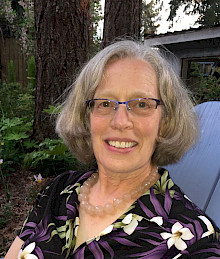
Martha (Marti) Bosma
Course: Exploring Neuroscience: Examining the Process of Discovery
My purpose in teaching transfer students is to smooth their transition and to strengthen their skills so they will succeed in upper-division classes at UW.
Any student who has ever been affiliated with the Seattle Promise program and who is admitted to and chooses to attend UW-Seattle in Autumn 2026 is invited to participate in a Transition seminar.
Seminars run from August 25, 2026 through September 17, 2026. Students are expected to be on campus from 9:30 to 1:00pm, Tuesday and Thursday and will have some class meetings in Autumn Quarter.
Students in the seminars will work directly with UW Faculty, begin building connections to the UW Campus and get personalized academic and career advising! Participants will also receive a $1,000 stipend to help offset the potential costs of attending the course (parking, transportation, etc). All seminars fulfill UW Writing (W) credits that will apply towards your UW degree. Watch our introductory video to learn more.
If you have any questions, please feel free to contact us at path2uw@uw.edu and a member of our team will follow up with you!
Ready to enroll? Visit our seminar enrollment page
How is a particular scientific phenomenon understood, or what causes a particular disease? What steps lead from asking to answering a research question? To many people reading the newspaper, scientific results seem contradictory or confusing. What are all those people doing, if they never come to a conclusion? In fact, every scientific question that is “answered” actually yields more questions, as the details of a particular system are clarified. More details lead to more unknown factors and mechanisms. This is the process of discovery, in which a particular question is “answered” by uncovering the mechanisms for the phenomenon.
We will discover how specific questions in neuroscience are asked, answered, and the consequent asking of new questions. We will concentrate on the visual system, and learn the methodology of how visual transduction and perception occur, and what might go wrong either during the development of the system, or in the adult organism. This will be done in a research-driven manner, examining original literature and assessing the results of experiments. Students will gain skills in examining and analyzing data, which will apply both to learning new material in upper-division classes and in everyday life.
UW Professor, Department of Biology
My purpose in teaching transfer students is to smooth their transition and to strengthen their skills so they will succeed in upper-division classes at UW. My motivation is to help transfer students successfully navigate the UW and excel in their chosen areas.
Many neuroscience classes at the University of Washington are major-restricted, so this is a unique opportunity to learn from a department faculty member and access this universally impactful and applicable content regardless of your intended program!
Students will gain experience in focusing research questions by reading and summarizing journal articles from the primary literature. Students will identify the hypotheses tested, understand the techniques used, analyze the data in detail and place the results in context of the field. The class will focus on neuroscience, but students will discuss articles in other STEM areas of interest, to understand how those techniques and questions apply to the biological arena. Students will also have daily analytical and numerical problems which enhance quantitative understanding of data, and to be able interpret whether data is significant. This will enhance student preparation for transfer to upper division science classes at UW.
We are immersed in a complex and pervasive media culture, which makes it difficult for us to recognize the intricate relationship between media, technology, and society. What we see, hear, read, and experience are largely a product of our society and its particular political, economic, material, and cultural configuration. This relationship also shapes our understanding of ourselves, our society, and the world around us. Our media culture is undergoing a profound series of transformations – as new technologies, new forms of entertainment, new venues for political debate, and new models of participation and labor emerge online.
This course will interrogate how the social, political-economic, and cultural landscape is changing in relation to digital media and information technologies. We will develop critical resources to better understand the history of these technologies and emerging communicative forms; the economics and politics behind them; the sociocultural moments from which they have emerged; and the shifts they have engendered. We will look at a diverse array of media, including social media, rap and music, as well as graffiti. At the end of the quarter students will create their own project in a medium of their choice to demonstrate what they have learned.
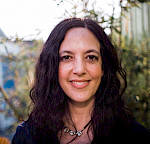
UW Associate Teaching Professor, LSJ/ Sociology
One of my main goals as an instructor is to create the conditions in which my students are best able to learn. This includes providing access to all people who are seeking an education. I have taught high school classes, undergraduates at UW, law students, and students inside our state prisons. Everyone should feel welcome and capable in our classrooms. I am looking forward to welcoming transfer students to the UW and helping to create the conditions for them to have a smooth transition into the university. I believe that a wide diversity of students in our classrooms creates the best learning environment for all of us.
We will engage with a range of media to further our study of media in society. We will read academic, news, and pop culture articles, watch videos, listen to and analyze popular music and rap as political speech, explore social media platforms, and consider graffiti as a medium. Through our exploration of these media we will consider the many ways in which society is influenced by media, and the ways that society in turn can impact media.
Ultimately we will analyze how the media form publics within society and how they interact with those publics. We will understand how media define, shape, reinforce, and transform Americans’ political ideas, economic ideologies, and policy preferences, as well as uncover examples and sources of media bias in the presentation of political issues, candidates, and ideologies. We will compare and contrast the different strategies by which citizens can influence the mass media. Students will evaluate how media shape and are shaped by individual identities along axes such as race, gender, and sexuality. We will also critically analyze the ways in which media are able to essentially turn citizens into data points that are used to impact nearly every part of our lives.
By the end of this course students will be able to critically analyze media and how it impacts our lives and society in many ways. Students will be able to discern patterns in media and how they help form individual identities as well as communities. Students will be able to identify the ways in which citizens can impact media. And students will have some fun with looking at popular culture and thinking about how the media we turn to for entertainment are vehicles for information, political speech, and a voice for those who might not otherwise have a platform.
Learn more about what it is like to enroll in the Path to UW program.
Learn more about Frequently Asked QuestionsMartha (Marti) Bosma
Course: Exploring Neuroscience: Examining the Process of Discovery
My purpose in teaching transfer students is to smooth their transition and to strengthen their skills so they will succeed in upper-division classes at UW.

© 2026 University of Washington | Seattle, WA